

Flying from Vietnam to Toronto in April was a long journey, but what stayed with me was not the distance. It was the remarkable convergence of ideas. Across three days of CX Leaders Advance, speakers from different industries and countries kept returning to the same priorities: proving business value, strengthening governance, exercising human judgment alongside AI, and expanding the influence of CX across the organization.
To me, that signals a new phase of maturity for Customer Experience. Here are eight lessons I brought home.
This past April, I flew to Toronto from Vietnam to participate in CXPA's CX Leaders Advance. I feel blessed that I was able to make this long trip and to have had such a great experience at the conference that I want to share my key take aways with the broader CX community.
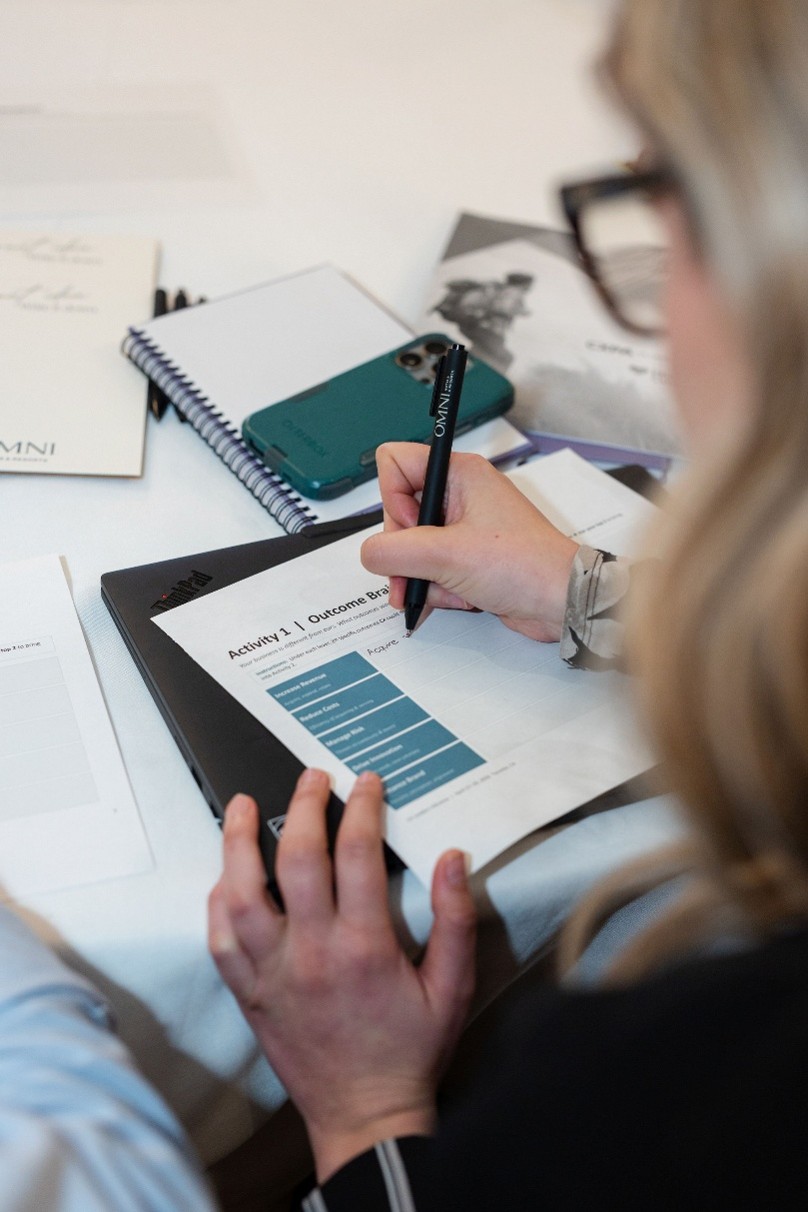
One line from Stephanie Leheta, CCXP has stuck with me: "We are not CX leaders. We are business leaders who use CX insights to drive meaningful change." This has important implications for the future of our profession, because it changes how we speak about and frame the value that we’re delivering to our organizations. It reflects a shift in the professional identity of Customer Experience - from a discipline that primarily monitors experiences to one that increasingly helps organizations make better business decisions.
NPS®, CSAT and CES still have a place, but the question is no longer "What is your score?" It is "how does it help us improve business outcomes?" The focus has shifted away from vanity metrics and toward areas like retention, revenue, trust, risk reduction, cost-to-serve and employee effectiveness.
Jeannie Walters, CCXP put it plainly: "Your strategy is not to improve NPS." And Judy Bloch, CCXP built on this idea, saying "Speed to action matters more than speed to insight."
Several high-performing organizations presented sessions at the conference, including Western Water, HP, and CIBC. All are using customer insights before decisions get made, not after the problems occur. CX is being used to shape policy, influence investment, design future experiences, and prevent friction before it happens.
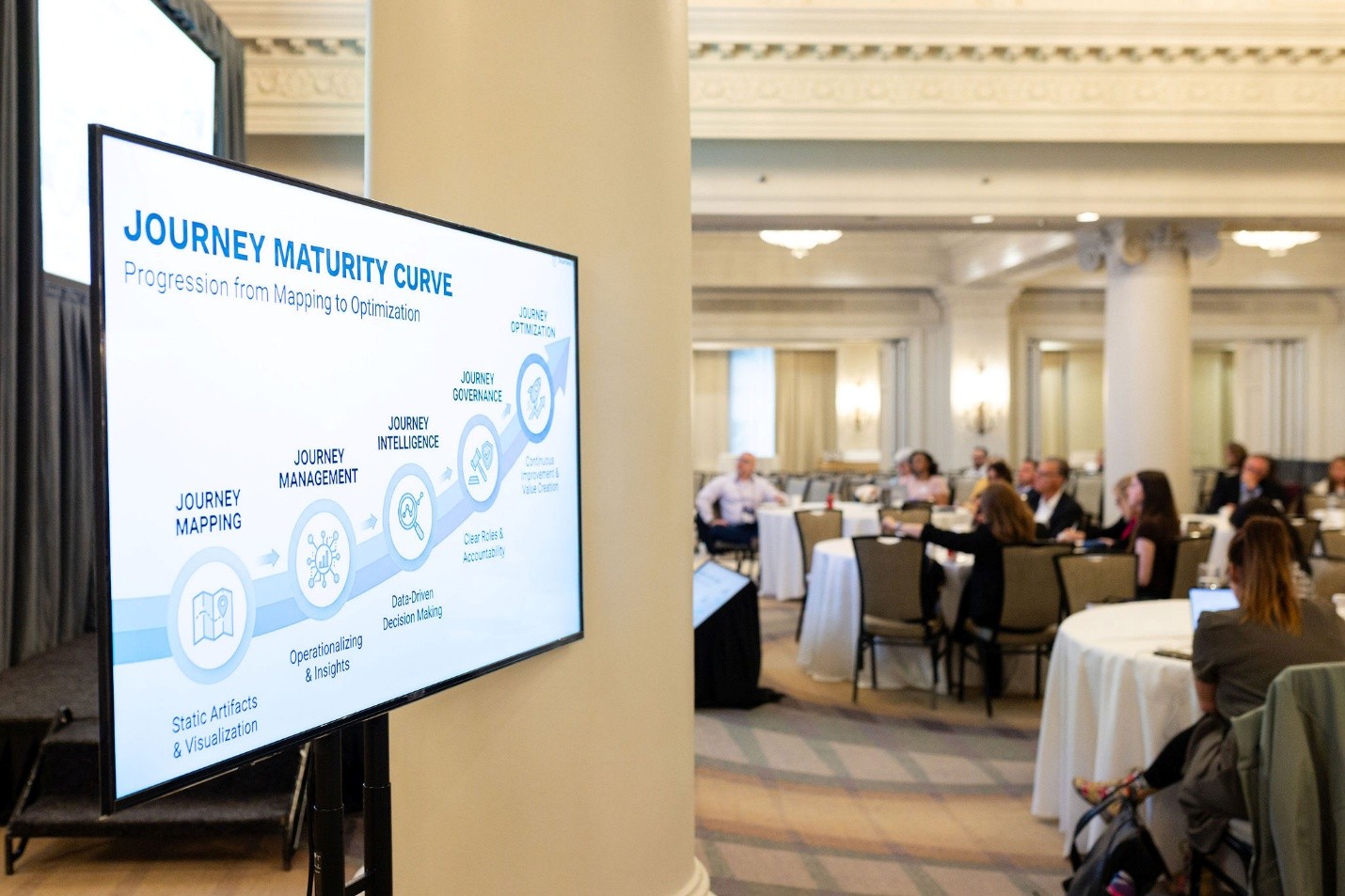
Journey mapping used to be a sticky-note exercise created on a workshop wall and too often relegated afterward to an office shelf. What I heard in Toronto was that journey management is becoming an operating discipline applied to real business issues like revenue leakage, AI deployment, prioritization, and aligning the whole organization around the customer. Dave Seaton, CCXP said he was encouraged to see journeys return to the conversation, and I was too.
The discussion was no longer about whether organizations should adopt AI. It was about how they should govern it with sufficient judgment, clear guardrails, and careful consideration for customer trust. The insight I found most sobering was that the biggest risk is not AI failure — it is the possibility that critical thinking is being replaced by AI decision making. What is needed is for CX leaders to develop and use good judgement on when and how AI is – and is not – used.
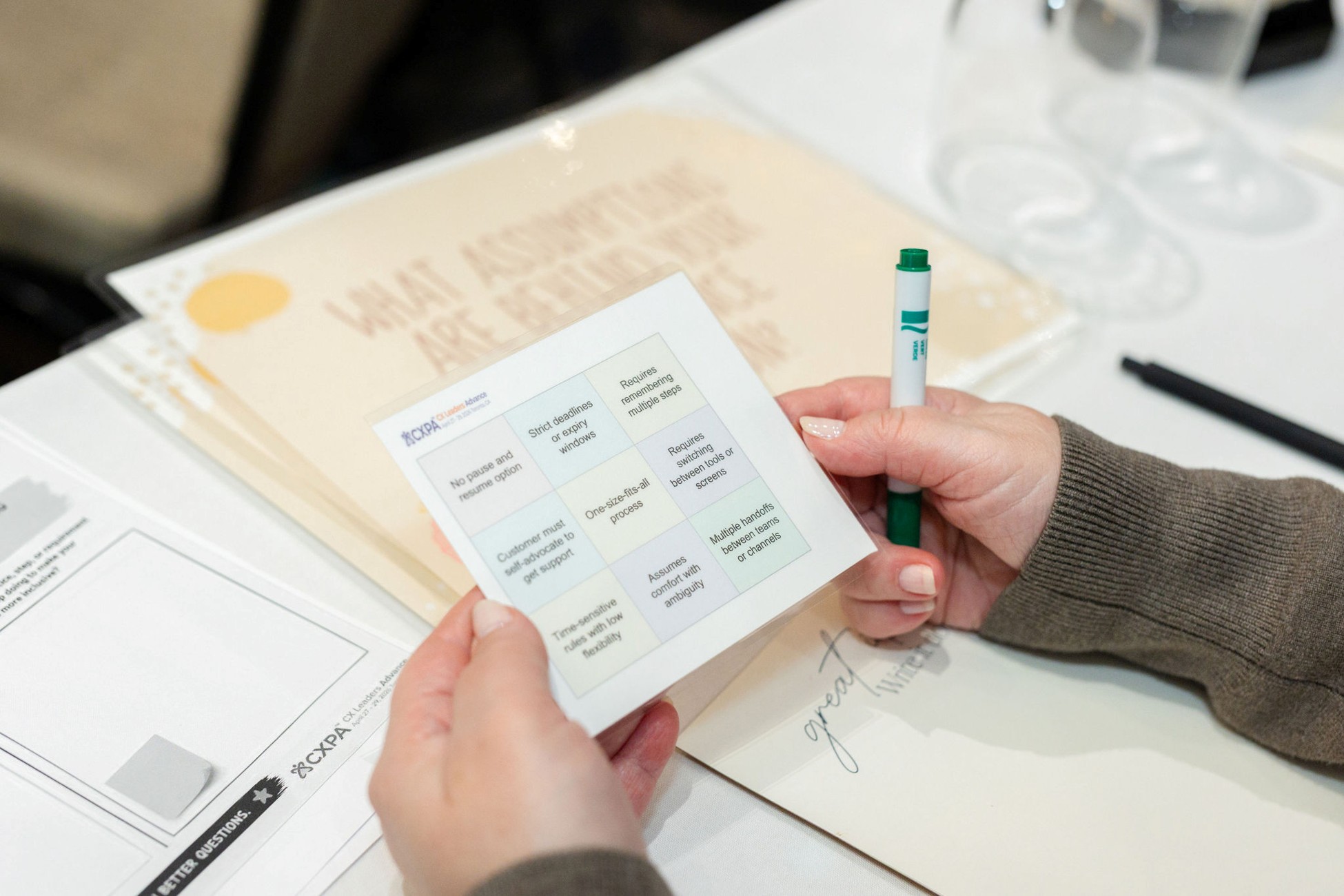
One idea gradually emerged across several sessions: the future question is no longer simply, "What does the customer want?" Increasingly, it is, "What state is the customer in?" Customers may be stressed, anxious, financially vulnerable, neurodivergent, or recovering from difficult life events. The same journey can therefore feel effortless to one customer and overwhelming to another. Customer Experience is expanding beyond convenience and efficiency to include emotional context, mental wellbeing, inclusion, and invisible disabilities. Understanding the customer's state is becoming just as important as understanding their needs.

The debate over where CX should sit (marketing, strategy, operations, technology, sales) produced no consensus. What the successful teams showcasing their work at the conference had in common was executive sponsorship, access to data, governance mechanisms and business credibility, and these factors mattered more than reporting structure.

Ian Golding, CCXP, said "CCXP does not define you, but it can elevate you." Earned authority that is built through expertise, trust and demonstrated impact can help build lasting credibility and influence.
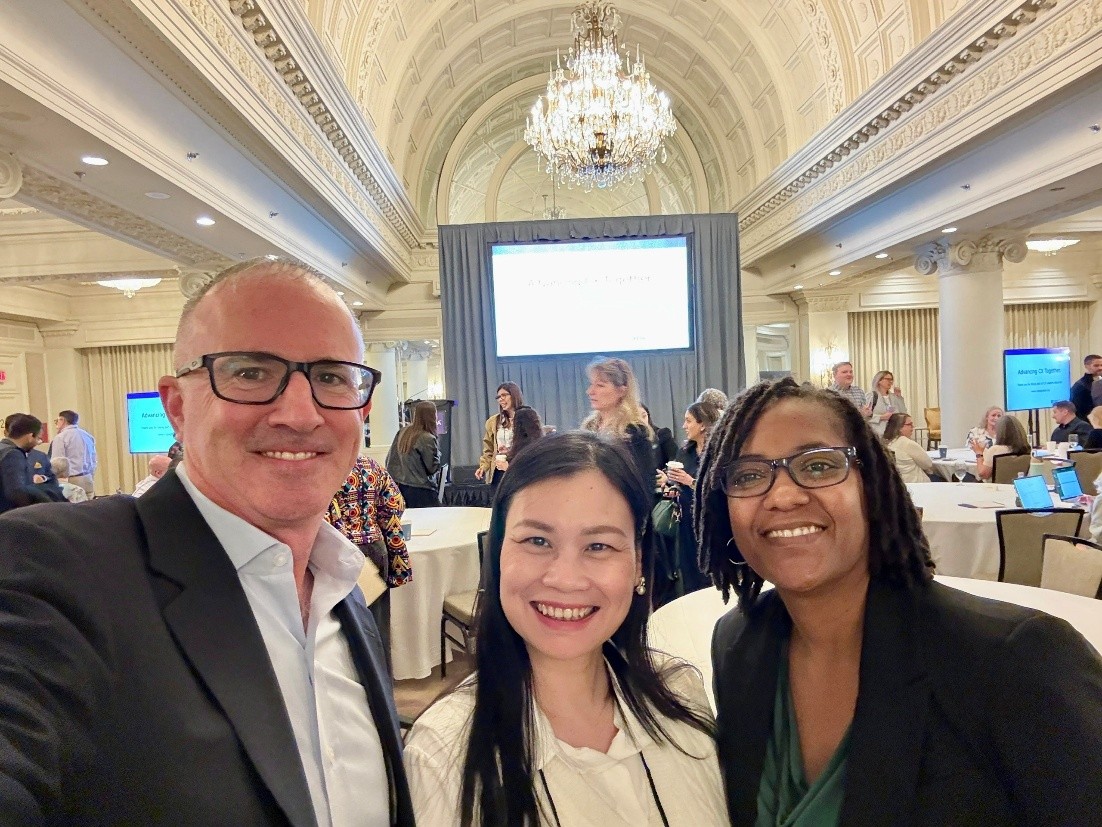
I left Toronto heartened by the fact that CX is no longer fighting to prove it matters —but sobered by the fact that we are now being challenged to prove we can help lead business change. That shift - from metrics to outcomes, from tools to influence, and from execution to leadership – is perhaps the clearest signal yet that Customer Experience is entering its next stage of maturity. It is a more demanding challenge than proving the value of CX ever was. The challenge ahead is bigger than before, but so is the capability of our community. After three days of conversations in Toronto, I left with confidence that we are increasingly ready to tackle it together.
Thao Nguyen, CCXP, shares how she shifted her thinking to overcome obstacles and achieve success on the CCXP exam.
Every CX team has a growing list of customer pain points, employee feedback, and improvement ideas, but not everything can happen at once. In this article, Lauren Feehrer, CCXP explores how Agile thinking can help CX leaders prioritize effectively, reduce overwhelm, and turn insight into meaningful progress.
As AI makes personalization commonplace, what will truly differentiate customer experiences? Rachel Cope, CCXP explores a future where trust, authenticity, ethics, and human values become more important than technology itself.
Ayman van Bregt (Netherlands) and Marineuza (Portugal) are both on the CXPA Europe Council. They met in person for the first time over coffee — and the conversation went exactly where you'd expect. ________________________________________