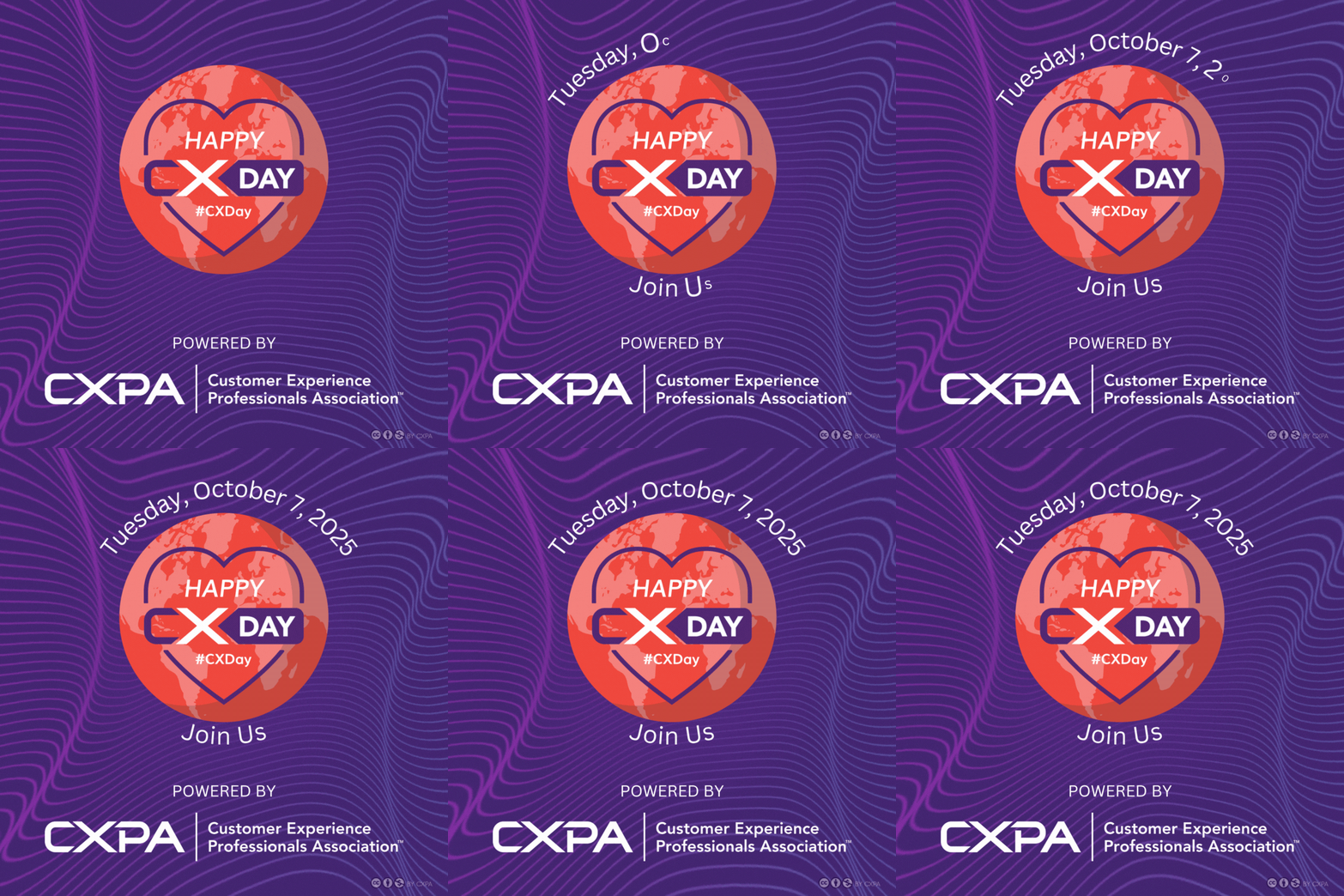
The continuing theme of CX Day, celebrated on the first Tuesday in October each year, is “good CX delivers better outcomes for customers, employees, and organizations.”
Each year, I try to use CX Day as a checkpoint – not just to celebrate, but to reconnect with peers and think intentionally about how to strengthen our impact going forward.
This year’s celebration is just around the corner (Tuesday, October 6, 2026), and now is the perfect time to start planning how you’ll celebrate the incredible work being done in customer experience that impacts business growth.
Whether you're organizing something big or keeping it simple, here are three quick actions you can take today to set yourself up for success.
Has your CX work led to measurable results?
Get inspired by reading the newest Proven Business Impact case studies and consider sharing your own.
All case studies submitted by July 31, 2026 will automatically be considered for the annual CX Impact Award, which will be announced on CX Day.
Learn more and submit here.
CX Day is a great opportunity to spotlight your team’s efforts to drive growth through CX, and to engage colleagues across departments.
Reach out now to see what your organization is planning—or get the ball rolling yourself.
Even a simple lunch-and-learn, leadership shoutout, or cross-functional roundtable can make a big impact.
The continuing theme of CX Day, celebrated on the first Tuesday in October each year, is “good CX delivers better outcomes for customers, employees, and organizations.”
Each year, I try to use CX Day as a checkpoint – not just to celebrate, but to reconnect with peers and think intentionally about how to strengthen our impact going forward.
This year’s celebration is just around the corner (Tuesday, October 6, 2026), and now is the perfect time to start planning how you’ll celebrate the incredible work being done in customer experience that impacts business growth.
Whether you're organizing something big or keeping it simple, here are two quick actions you can take today to set yourself up for success.
Has your CX work led to measurable results?
Get inspired by reading the newest Proven Business Impact case studies and consider sharing your own.
All case studies submitted by July 31, 2026 will automatically be considered for the annual CX Impact Award, which will be announced on CX Day.
Learn more about Proven Business Impact and submit your case study.
CX Day is a great opportunity to spotlight your team’s efforts to drive growth through CX, and to engage colleagues across departments.
Reach out now to see what your organization is planning—or get the ball rolling yourself.
Even a simple lunch-and-learn, leadership shoutout, or cross-functional roundtable can make a big impact.
Download CX Day graphics and resources to help promote your celebration.
Explore this valuable resource to enhance your customer experience practice.
Explore this valuable resource to enhance your customer experience practice.
Explore this valuable resource to enhance your customer experience practice.
One of the greatest challenges for CX professionals is securing executive buy-in and support. The CXPA US Regional Council explored this issue throughout 2025. What began as a healthy exchange about “what worked in my organization” evolved into the insight that there isn’t one C-Suite archetype to address – nor one set path to securing support for customer experience. Rather, the discussions unearthed a wide range of C-Suite perspectives about customer experience. These differences manifest in varying expectations and support for CX. The insight from the conversations was not a defined argument or set of data, but rather a realization that each CX professional must intentionally work to understand the unique perspectives of their key C-Suite stakeholders in order to develop a strategy to secure support that aligns CX with their perspectives and expectations. This toolkit includes two sets of resources addressing four critical C-Suite roles: Chief Executive Officer Chief Operating Officer Chief Sales Officer Chief Marketing Officer A personas is presented for each role. We hope that the presented personas help to accelerate your empathetic understanding of the myriad factors that make each role (and individual) unique. Chances are that you will relate to some of the elements depicted in the personas, while finding other elements very different from your personal experience. Worksheets are also provided for each role to help guide your consideration of these key CSuite leaders at your organization. We have intentionally kept the worksheets focused and brief, but hope that they serve as a useful tool to help you build actionable understanding that will increase your CX success. Please consider these resources as another tool in your CXPA toolkit. Further resources on stakeholder analysis and influencing the C-Suite are provided in the Effective Collaboration publication series and Building CX Credibility Through Quality Research: A Guide for CX Professionals. The CXPA website and online community are additional strong resources. A huge thank you to the entire 2025 CXPA US Regional Council for this work! Melanie Long, CCXP (Chair) Nick W. Griffin, CCXP Griffin, CCXP – Vice Chair Amanda Riffkin, CCXP Chad Ghastin, CCXP Christen Spirocostas Dean Holden George Bevensee, CCXP Jason Rankin Jennifer Wright, PhD, CCXP Karyn Furstman, CCX, CCXP, XMP Keith Parris, CCXP Kevin McEnery II, CCXP Lauren Feehrer, CCXP, Neil Barrie, CCXP, Patty Soltis, CCXP Stephanie Bidgood, MBA, CCXP, Stuart Gilchriest, CCXP, Toni Keller